This article really highlights the marriage of social media and social change that we have been working on in class. This particular example is very promising and I hope to find more published work regarding this. This is one of the best articles I have read concerning HIV discrimination and a plausible, effective solution.
Can twitter be a force against HIV discrimination?
A project analysing tweets alongside take-up of HIV services in Brazil show social media can inform public health
Advertisers have seen the potential of social media for informing their work for years, but public health is only just looking into the potential for improving the impact of campaigns.
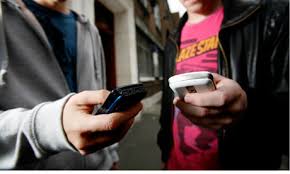 As part of UNAids’ Protect the Goal
campaign to raise awareness of HIV and Aids during the World Cup in
Rio, we explored whether tweets could be used to measure HIV-related
stigma. We wanted to find out whether discrimination makes people less
likely to access health services such as condoms, HIV tests and
antiretrovirals. We captured about 8,000 tweets in Portuguese filtering
all the public messages, with a taxonomy of keywords covering
discrimination, HIV prevention and testing topics. A challenge for the project was to discover to what extent people
tweet about personal issues. In this case we found that most of the
tweets extracted were expressing discriminatory attitudes, some about
HIV prevention, and very few were about testing: people do tweet about
condoms, but few about getting an HIV test. We also compared tweets
(positive and negative) in the cities where matches were taking place
with the number of people who used extra health services that were put on for the World Cup (mobile testing stations and condom give-aways).
As part of UNAids’ Protect the Goal
campaign to raise awareness of HIV and Aids during the World Cup in
Rio, we explored whether tweets could be used to measure HIV-related
stigma. We wanted to find out whether discrimination makes people less
likely to access health services such as condoms, HIV tests and
antiretrovirals. We captured about 8,000 tweets in Portuguese filtering
all the public messages, with a taxonomy of keywords covering
discrimination, HIV prevention and testing topics. A challenge for the project was to discover to what extent people
tweet about personal issues. In this case we found that most of the
tweets extracted were expressing discriminatory attitudes, some about
HIV prevention, and very few were about testing: people do tweet about
condoms, but few about getting an HIV test. We also compared tweets
(positive and negative) in the cities where matches were taking place
with the number of people who used extra health services that were put on for the World Cup (mobile testing stations and condom give-aways).
While the analysis is still underway, the project has triggered thoughts about how we could deliver real-time follow up information on health services and correct misconceptions through social media opinion leaders, for example on the transmission of HIV and effectiveness of treatment.
And social media analysis can be used for more than understanding
opinions and attitudes. There is also potential for understanding
people’s unhealthy habits. For instance, it is possible to predict
whether a person smokes cigarettes or drinks alcohol using a person’s record of “likes” on Facebook.
Mapping rapidly changing trends at population-level is a promising
opportunity to keep track of risky behaviours, such as those associated
to non-communicable diseases.
There are numerous challenges to make social media data helpful in public health. We need to learn how to work with massive incomplete and biased data: social media is not a statistically representative sample of a population; the demographics of users are frequently unknown; not all posts are geo-referenced when they are published. It is also critical to follow strict privacy principles and never access data containing private personal information or communication content.
Adapting our decision-making processes to consider information flows coming from big data sources is not business as usual. Yet, we strongly believe that social media, and the data derived from it, can serve as a powerful tool and indicator for human rights and health.
Taavi Erkkola is senior adviser at UNAids & Miguel Luengo-Oroz is chief scientist at UN Global Pulse. Follow @UNGlobalPulse on Twitter.
This article originally appeared in the US edition of The Guardian on Wednesday, November 12, 2014 and can be found at http://www.theguardian.com/global-development-professionals-network/2014/nov/13/can-twitter-be-a-force-against-hiv-discrimination
Advertisers have seen the potential of social media for informing their work for years, but public health is only just looking into the potential for improving the impact of campaigns.
While the analysis is still underway, the project has triggered thoughts about how we could deliver real-time follow up information on health services and correct misconceptions through social media opinion leaders, for example on the transmission of HIV and effectiveness of treatment.
This approach can be used in other areas of public health. In 2013, a Unicef study
in eastern Europe found that social media can be used to influence
opinions around immunisation. The report recommended that governments
and international agencies need to counter the anti-vaccination
sentiment identified on social media with strong messaging.
There are numerous challenges to make social media data helpful in public health. We need to learn how to work with massive incomplete and biased data: social media is not a statistically representative sample of a population; the demographics of users are frequently unknown; not all posts are geo-referenced when they are published. It is also critical to follow strict privacy principles and never access data containing private personal information or communication content.
Adapting our decision-making processes to consider information flows coming from big data sources is not business as usual. Yet, we strongly believe that social media, and the data derived from it, can serve as a powerful tool and indicator for human rights and health.
Taavi Erkkola is senior adviser at UNAids & Miguel Luengo-Oroz is chief scientist at UN Global Pulse. Follow @UNGlobalPulse on Twitter.
This article originally appeared in the US edition of The Guardian on Wednesday, November 12, 2014 and can be found at http://www.theguardian.com/global-development-professionals-network/2014/nov/13/can-twitter-be-a-force-against-hiv-discrimination


